Sunday, April 6, 2025
Love God, Love People
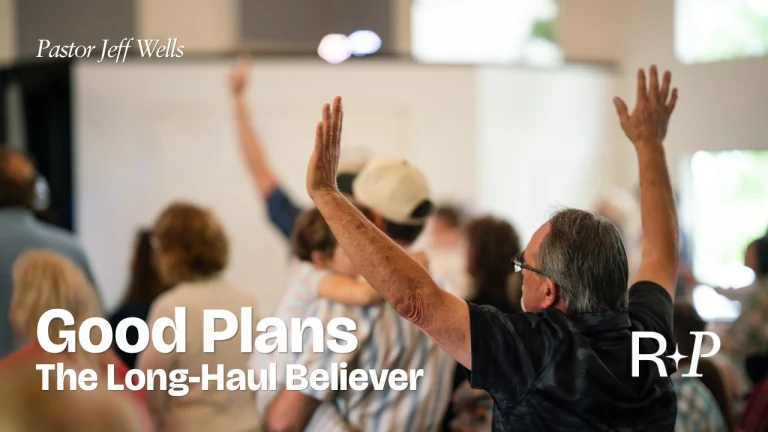
Pastor Jeff Wells · 31:47 · Mark 12:28-34
Sermon notes
Summary generated from the recording
Pastor Jeff continues a series on the questions put to Jesus in Mark 12. This week a scribe asks which commandment is first of all. Jesus answers by quoting the Shema from Deuteronomy 6 and adding the second commandment from Leviticus 19:18, to love your neighbor as yourself. Pastor Jeff places the scene in Holy Week: after the triumphal entry and the cleansing of the temple, Jesus is back in the temple area answering questions. The scribe, unlike others who were trying to trap Jesus, sincerely wanted to know the highest priority. Jesus tells him, "You are not far from the kingdom of God."
Pastor Jeff explains that loving God wholeheartedly means putting him first in every part of life. Using the heart, soul, mind and strength, he describes the heart as passion and devotion, the soul as our emotions and decisions, the mind as what we read and put into it (renewed daily by God's word), and strength as all our resources, talents, skills and influence. He compares this to falling in love and marrying, when everything else becomes secondary. He says this love is a choice, not just a feeling.
He then turns to loving our neighbor, noting that Leviticus covers grudges, business, justice, the poor, the stranger and the broken. Love is active and personal, so faith moves from theory to action. He tells a humorous story of different people responding to a man in a pit, ending with Jesus seeing the man and lifting him out. He also points to the good Samaritan in Luke 10, saying our neighbor is whoever is hurting along our path. Helping may cost time and resources and may be inconvenient.
Pastor Jeff says the verse describes a "love triangle" of loving God, neighbor and ourselves, and that getting these in the right order matters. Drawing on the late Timothy Keller, he describes three identities. The traditional identity says "I'm loved if I meet the standards of others," which leads to people-pleasing. The modern identity says "I am loved when I love me," which leads to self-absorption and moral relativism. The gospel identity says "I am loved because he first loved me," and our value comes from God's free gift of grace in Jesus rather than from other people or from ourselves.
From this, Pastor Jeff teaches that we can love because God loved us first. He says the Holy Spirit tells us we belong to God, changes us from the inside out, and pours God's love into our hearts so that it overflows to others. He reads 1 John 4 and describes a "circle of love": God sends Jesus, we receive and respond to that love, and then we pour it out on others. He warns that we can drop the baton by receiving God's love but not passing it on to family, neighbors and the world.
He closes with examples from the congregation, including a church member who designed a coffee mug for an astronaut, a couple who run the church's Holy Spirit prayer ministry where many have been set free, and a sound volunteer who practices radical hospitality for the young adults. His point is "You don't have to be a rocket science to love people." He says God has given everyone grace and ability, and that people on the edge of the kingdom may say yes to Jesus because of our love and kindness.
Life Group questions
- Pastor Jeff described loving God with heart, soul, mind and strength. Which of these four is easiest for you to give to God right now, and which is hardest? Why?
- He said loving God is a choice and not based on feelings. What does it look like to choose to love God on a day when you don't feel like it?
- In the story of the man in the pit, many people responded in ways that didn't help, and Jesus lifted him out. Who is a "neighbor" in a pit near you, and what might it cost you to help?
- Pastor Jeff described three identities from Timothy Keller: traditional (loved if I meet others' standards), modern (loved when I love me), and gospel (loved because he first loved me). Which of the first two do you tend to fall back on, and how does the gospel identity change that?
- He talked about a circle of love and the risk of dropping the baton. Where might you be receiving God's love but not passing it on to family, neighbors or coworkers? What is one step you could take this week?
Hear it in person
Sundays at 10 AM. Pre-service prayer at 9:15.