
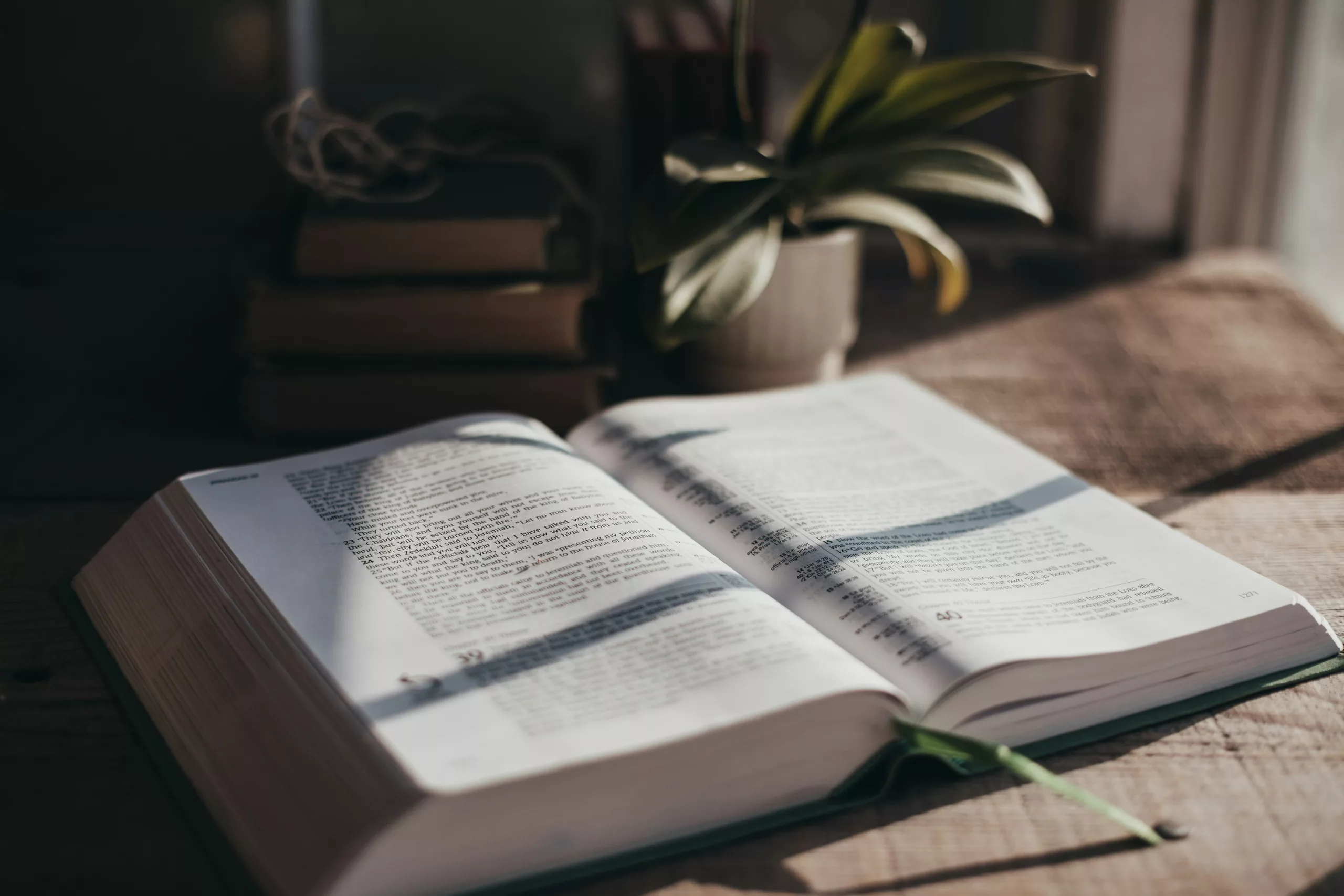
Can I really trust the Bible?
Ancient, translated, debated — can you actually trust it? An honest look, with no need to switch off your brain.
Let’s name the real doubts, because they’re reasonable. Wasn’t the Bible written long after the events? Hasn’t it been copied and changed over centuries, like a game of telephone? Isn’t it full of contradictions? Wasn’t it just picked by people in power?
If you’ve wondered any of these, you’re in good company — plenty of believers have asked the same things. A faith that can’t handle hard questions isn’t worth much. So let’s not dodge them.
It holds up better than you might expect
- The manuscripts are remarkably early and numerous. We have thousands of New Testament manuscript copies — far more, and far closer to the originals, than for any other document from the ancient world. Scholars across the spectrum agree the text we have is what was written.
- The Old Testament held up under testing. When the Dead Sea Scrolls were discovered in the 1940s, they pushed our oldest copies of Hebrew Scripture back a thousand years — and the text had barely changed.
- It reads like testimony, not legend. The Gospels include awkward details, named witnesses, and embarrassing moments the authors would never invent — the marks of people reporting what they saw.
- Outside sources back the basics. Non-Christian writers like Josephus and Tacitus confirm that Jesus lived, was crucified under Pilate, and had followers who said he rose.
None of that forces faith. But it does mean the Bible isn’t a fragile myth — it’s a serious, well-attested collection of documents worth taking seriously.
A book that reads you back
There’s something the manuscript evidence can’t capture: people meet God in this book. The Bible calls itself “alive and active” (Hebrews 4:12), and at RockPoint we’ve watched it happen — someone opens it skeptical and walks away changed, comforted, convicted, known.
We’re a Spirit-filled church, so we believe the Holy Spirit still speaks through Scripture — it’s not just information about God, it’s one of the main ways he talks to us. You can study the Bible like any other book. You can also let it study you.
What you can do this week
- Read it for yourself — start with John. Don’t start at page one. Read the Gospel of John and simply meet Jesus. Ask as you go: who is this person?
- Bring your questions, don’t bury them. Keep a list of what bothers you. Good faith welcomes hard questions — ask us, or a thoughtful Christian you trust.
- Read with other people. Scripture opens up in conversation. A friend or a Life Group reading alongside you helps more than going solo.
- Try the experiment of prayer. Before you read, try saying: “God, if you’re real and you’re in here, show me.” Then read honestly and see what happens.
Trusting is a bit like tasting
Here’s something worth knowing: we trust most important things — people, promises, our own memory — on good evidence, not mathematical proof. Trusting the Bible works similarly. The evidence gets you to “this is credible”; actually reading it, and meeting the God in it, is how trust grows from there.
The Psalmist’s invitation is “taste and see that the Lord is good” (Psalm 34:8) — not “conclude, and then maybe taste.” You don’t have to resolve every question before you open it. Start reading with honest curiosity, and let your confidence grow.
A prayer for the honest skeptic
You don’t have to fake certainty. If you’re willing, try praying something honest:
“God, I’m not sure what I believe about the Bible. But if you’re real and you speak through it, I’m asking you to meet me as I read. Give me an open mind and an honest heart. Show me what’s true. Amen.”
If a question’s nagging at you, we’d genuinely love to talk — no pressure, no judgment.
You don’t have to figure this out alone
Have a question about the Bible, want someone to talk to, or want to explore this in person? Send a note — a real person from RockPoint will follow up.
Keep exploring
- The Gospel of John — read the source before the reviews.
- The Reason for God by Timothy Keller — thoughtful answers to honest doubts.
- The Historical Reliability of the Gospels by Craig Blomberg — a deeper, scholarly look.
- Mere Christianity by C.S. Lewis — a classic for the curious skeptic.
- Related questions: How can I actually know God personally? and What is my purpose?
- New here? Plan a visit — bring your questions; we’re not afraid of them.
Questions people ask next
Hasn’t the Bible been changed over time?
The manuscript evidence says no, in any meaningful way. We have thousands of early copies that agree to a remarkable degree, and the Dead Sea Scrolls confirmed the Old Testament was faithfully preserved.
Isn’t the Bible full of contradictions?
Many apparent contradictions are differences in perspective or detail — like several witnesses describing one event. Some passages are genuinely hard, and honest scholarship engages them rather than hiding them.
Who decided what books got into the Bible?
The early church recognized — rather than invented — the books that were apostolic, widely used, and consistent with the faith. It was discernment over time, not a power grab.
I have doubts — is that allowed?
Yes. Doubt isn’t the enemy of faith; honest doubt that keeps seeking often leads to deeper faith. Bring your questions — we’re not afraid of them.