
Does science disprove God?
If you’ve felt forced to choose between a telescope and a prayer, we’re really glad you’re here. The good news: that choice is a false one, and you can love both.
A lot of people grow up believing there’s a war between science and faith — that to be smart and modern, you have to leave God behind. If that’s weighed on you, take a breath. The supposed war is far overstated, and plenty of brilliant scientists have been people of deep faith.
They answer different questions
Here’s the key: science is brilliant at how — the mechanisms, the matter, the math. It is simply not equipped to answer why, or who, or whether your life has meaning. Asking science to disprove God is like asking a metal detector to find beauty — it’s a fantastic tool pointed at the wrong kind of question. As the scientist-believers have long noted, you can fully explain the chemistry of a kettle boiling and say it’s boiling because someone wants tea. “How” and “why” can both be true at once.
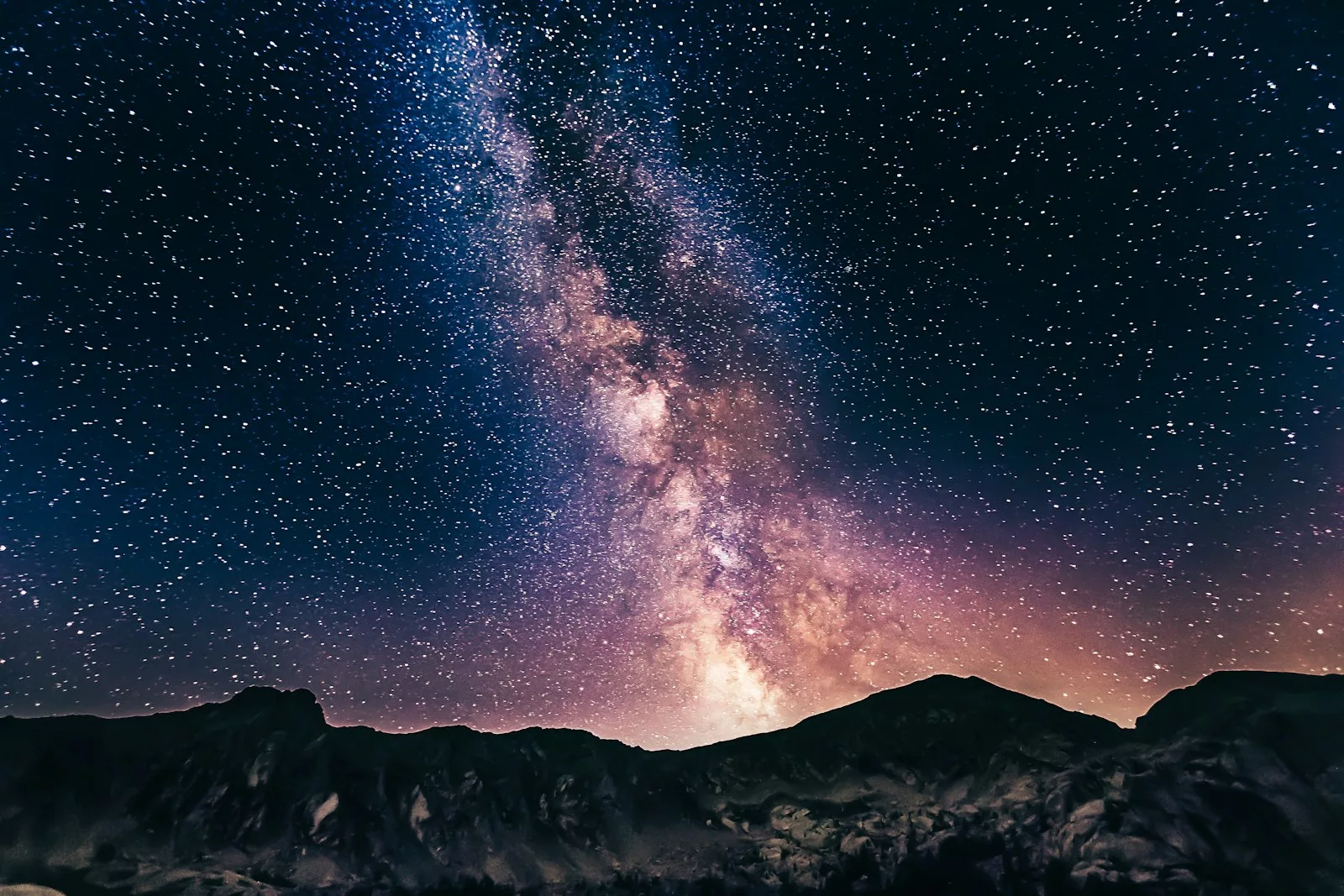
“The heavens declare the glory of God; the skies proclaim the work of his hands.”
Psalm 19:1
Faith that loves the universe
RockPoint is a Spirit-filled church, and we don’t think faith asks you to switch off your mind. Many founders of modern science — Newton, Faraday, Kepler — believed they were “thinking God’s thoughts after him.” The Big Bang itself was first proposed by a Catholic priest, Georges Lemaitre. The very thing that makes science possible — that the universe is orderly, rational, and discoverable — is exactly what you’d expect if a rational God made it. For many people, the more they learn about the cosmos, the more wonder, not less, points them toward a Maker.
What you can do with this
- Drop the false choice. You’re allowed to value evidence and believe in God. Most of history’s believers did.
- Read Genesis 1 for what it is. It’s ancient, beautiful literature about who made the world and why — not a lab manual competing with physics.
- Explore scientists of faith. Read Francis Collins or the work of BioLogos to see faith and science held together with integrity.
- Let wonder lead somewhere. Next clear night, look up and ask honestly: does all this point to anyone?
A prayer for the curious mind
“God, I don’t want to choose between honesty and faith. If you made all of this, I want to know you as the one behind it. Give me wonder that leads somewhere true, and help me follow the evidence with an open heart. Amen.”
Have a science-and-faith question you’d like to talk through with someone who respects both? Reach out below.
You don’t have to figure this out alone
Want prayer, someone to talk to, or an invitation to explore this in person? Send a note — a real person from RockPoint will follow up.
Keep exploring
- The Language of God by Francis Collins — a leading geneticist on science and faith.
- BioLogos (biologos.org) — thoughtful Christians exploring science and faith together.
- Related: Does God exist? and Can I really trust the Bible?
- New here? Plan a visit — bring your questions; we’re not afraid of them.
Questions people ask next
Do I have to choose between evolution and faith?
Many faithful Christians don’t see a conflict. The Bible’s opening chapters speak to who made the world and why it matters, not the technical mechanism. Sincere believers land in different places on the details, and that’s okay.
Aren’t most scientists atheists?
Many aren’t. Foundational figures like Newton, Faraday, and Georges Lemaitre (the priest who proposed the Big Bang), and contemporary scientists like Francis Collins, have held deep faith.
Isn’t faith just believing without evidence?
Biblical faith is trust grounded in reasons, history, and experience — not a blind leap. Christians believe the order and beauty of the universe point toward a Maker, rather than away from one.